Blogs in Schools

Blogs are being used more in primary schools, and are having an impact on teaching strategies (Krishnan, 2012). They give children the opportunity to write and get feedback from an audience. Introducing blogs into schools comes with limitations: technophobia, computer addiction, online identities, e-safety and more (Dullah, 2009).

Setting up a school blog involves getting everybody involved. Some teachers and pupils may be scared of the idea so obstacles have to be addressed to cater to everybody’s needs.

To initiate a blog one would need to set up an easy interface which everyone will be able to use, and understand.

Next would be to get a group of teachers (the Innovators) who are enthusiastic about technology, and will persuade people that it is worth using. The Innovators will start enticing other teachers to get involved. This next group would be the Early Adopters. After this group are involved the next step is to get the majority of the teachers on board. The early and late majority. Some teachers may still feel uncomfortable with the idea of using the internet for children to post their work. It is important not to make people participate, just advise people of the advantages of using blogs in their classroom. This minority being are called Laggards.

The next part of the process is enticing the children. Some children will love the idea of using technology, for others the thought of using ICT will scare them. The Adoptive Curve could be used again. Showing a real passion and enthusiasm about blogs will get children interested. Another way to get children involved is giving them topics of interest to write about. If they find what they are writing about boring, they will lose interest quickly.

We must not forget the parents, like teachers and children, some will be happy with this method, whereas others will fear children using blogs in the classroom. Many of these fears are based on the safety of their child. It is important to remember the e-safety rules, when using the internet. Blogs can be read by anyone therefore ensure pupils do not give any personal information. Also people can post comments which could result in inappropriate comments being left, comments could be monitored (YHGfL, 2013).

Blogs form one part of the children’s learning ‘toolbox’. It needs to be recognised that some children will prefer this method, whereas others will not like learning using computers. This method needs to be part of a well-balanced learning environment. The impact of ICT in the classroom, if used properly, can aid all styles of learning, VARK, as it can be used to meet the needs of each child’s learning style. (Wong and Hew, 2010)

Having implemented blogs and used the processes above to motivate all within the school community, it is important to ensure the sustainability and continuation of its usage. As the internet can be used safely in different environments, this enables the blogger to proceed at their own pace in their chosen environment. It allows the teacher to monitor work at a convenient time.

This is one tool within a learning ‘toolbox’ that used in the right way can be effective in the learning process, although it is recognised that there are limitations in its application that need to be addressed on its inception.

References

Dullah, E. (2009) Benefits & Limitation of Blogs in Classroom. [Online]. Avaliable at: http://emanabdullah.blogspot.co.uk/2009/01/benefits-limitations-of-blogs-in.html (Accessed 16 April 2013)

Krishnan, V. (2012) How Blogs Are Being Used For Effective Education. [Online]. Available at: http://www.famousbloggers.net/effective-education.html (Accessed: 15 April 2012).

Wong, R. and Hew, K. (2010) The Impact of Blogging and Scaffolding on Primary School Pupils’ Narrative Writing: A Case Study. [Online]. Available at: http://repository.nie.edu.sg/jspui/bitstream/10497/4480/1/IJWLTT-5-2-1_a.pdf (Accessed: 15 April 2013).

YHGfL (2008) Blogging eSafety. [Online]. Available at: http://www.yhgfl.net/CPD/Your-CPD/Blogging/Blogging-eSafety (Accessed: 15 April 2013).

Learning, Remembering and Forgetting

‘In the past several decades, cognitive psychologists have determined that there are two primary memory systems in the human mind: a short-term, or “working,”…and a long-lasting memory’ (Vogel and Drew, 2008).

Fleming’s Visual, Aural, Read/Write and Kinaesthetic (VARK) theory suggests that every child has a different method of learning, and a different way of perceiving things they are taught. When a child is exposed to their preferred method of learning, pathways are opened to their short-term memory, where information is stored. (Ambreenalwani, 2012)

Many scientist believe there are three ways to store memories, sensory, short-term and long-term memory. (Mohs, 2007) The same principle is applied with learning.

Sensory memory is the ‘initial process of storing information that is perceived through our senses’ It does not last long, continuously being replaced.

Short-term memory allows you to recall information for a few seconds, its capacity is limited and relies on encoding information. Miller’s magic number seven goes with short-term memory, suggesting that we can store 7+-2 pieces of information at one time in short-term memory (Miller, 1955). Atkinson and Shiffrin (1971) suggest ‘control processes act within short-term working memory to make decisions and regulate information flow, thereby controlling learning and forgetting.’ Braddeley and Hitch (1974) proposed the working memory theory, after studying Shiffrin’s model in 1968. Their model consisted of three main sections, the central executive which is the control and it has two elements, one is the visual spatial sketchpad – you can only think of one thing, the other is the phonological loop – this is seen only in your short-term working memory. The other two are the supervisory system and the slave system.

This is supported by the Cognitive Load Theory which Artino (2008) describes as learners having a working memory with limited capacity when dealing with new information (Sweller, van Merriënboer, & Paas, 1998). Van Merriënboer and Ayres (2005) assumes that learners have “an effectively unlimited long-term memory holding cognitive schemas that vary in their degree of complexity and automation”. Artino suggests that “the implication of these assumptions is that learning will be hindered if instructional materials overwhelm a learner’s limited working memory resources”. This in turn would affect what is retained in the learner’s long-term memory.

Long-term memory, has to be coded and then reversed, this can get lost through illness or disease. When teaching children new things, the aim is to build up their long-term memory.

While experiencing an event, the brain links the sights, smells and sounds to create a relationship. That relationship forms a memory of the event (Ranpura, 2000). However we do not remember everything we build links for, and forget simple things. McLeod (2008) suggests there are two reasons for this. Firstly, memories disappear, or secondly, the memory cannot be retrieved.

References

Ambreenalwani. (2012) Vark Learning Styles. [Online]. Available at: http://www.studymode.com/essays/Vark-Learning-Styles-1159144.html (Accessed: 15 April 2013)

Artino (2008) ‘Cognitive Load Theory and the Role of Learner Experience: An Abbreviated Review for Educational Practitioners’ AACE Journal, 16(4), 425-239.

Atkinson, R. and Shiffrin, R. (1971) The Control Processes of Short-Term Memory. [Online]. Available at: http://suppescorpus.stanford.edu/techreports/IMSSS_173.pdf (Accessed: 15 April 2013).

Baddeley, A. and Hitch, G. (1974) Working Memory Model. [Online]. Available at: http://explorable.com/working-memory-model (Accessed: 14 April 2013).

Mohs, R. (2007) How Human Memory Works [Online]. Available at: http://science.howstuffworks.com/life/inside-the-mind/human-brain/human-memory2.htm (Accessed: 15 April 2013)

Ranpura, A. (2006) ‘How We Remember, and Why We Forget’ Brain Connection. [Online]. Available at: http://brainconnection.positscience.com/how-we-remember-and-why-we-forget/ (Accessed: 15 April 2013).

Identity and Personality

‘Since Allport (1937) and Murray (1938) envisioned personality…personality psychologists have focused their investigations on those important differences in social and emotional functioning that distinguish one whole person from the next.’
(McAdams and Olson, 2009, p. 5.2)

Identity can be anything from personal appearance to behaviour, personality to conscientiousness.

Erikson believed that personality develops in an order. Focusing on how children socialise and how this affects their self-esteem (McLeod, 2008). He split his theory into eight stages, trust verses mistrust, autonomy verses shame and doubt, initiative verses guilt, industry verses inferiority, identity verses role confusion, intimacy verses isolation, generative verses stagnation and ego integrity verses despair. The first stage, trust verses mistrust, starts from a young age all the way to the eighth stage, ego integrity verses despair, which Erickson suggests comes with age.

Like Erikson, McAdams and Olson (2009) believe that personality development is ongoing. They look at it from three standpoints: the person as actor (behaving), agent (striving), and author (narrating).

James Marcia, a Canadian clinical and developmental psychologist, refined and extended Erikson’s work on identity. After looking at Erikson’s fifth stage, identity verses role confusion, Marcia came to the conclusion that this stage consists of neither identity resolution nor identity confusion. Oswalt (2013) states that ‘Marcia’s theory descriptively categorizes four main points along the continuum of identity development.’ These included: Foreclosure, Identity Diffusion, Moratorium and Identity Achievement.

The humanistic approach ‘starts on the assumption that every person has a unique way of perceiving and understanding the world’ (Sammons, no date, p. 1). It explains that there are many factors that shape and form a person’s identity and personality.

Carl Rogers’, suggest that a person’s personality is affected by how others react towards the individual and how the individual views themselves (positive self-regard). Like Rogers, Maslow’s hierarchy of needs, shows a process of steps which will help to shape a person’s identity and their personality, however, unlike Rogers’s belief that people only needed unconditional positive regard, Maslow believed that people had a variety of needs which differed in immediacy at different times (Sammons, no date, p. 1).maslow

Who am I? My name is Phyllicia (Flick). I am a friend, a sister, a daughter. I am a youth leader, a girlfriend, a student and a granddaughter. I am a cousin, a niece and a goddaughter. Several people will know me as a facebook, twitter or youtube account. To some I am just a face. Am I an online personality or am I a person living in the online world. Having so many different accounts online would it not be possible to see ‘me’ online? My personality? My feelings and emotions? My identity?

Having an online personality allows connection with a wider community. However it has limitations. What you write online can be found by anybody on the internet. Does our online identity portray who we are? Do you act like yourself online, or do you hide behind a computer?

These are all question that I have asked myself and I am not sure of the answer. What do you think?

References

McAdams, D. and Olson, B. (2009) ‘Personality Development: Continuity and Change Over the Life Course’ The Annual Review of Psychology, 61, June [Online]. Available at: http://works.bepress.com/cgi/viewcontent.cgi?article=1003&context=brad_olson&sei-redir=1&referer=http%3A%2F%2Fscholar.google.co.uk%2Fscholar%3Fstart%3D30%26q%3Dfreud%2Band%2Bpersonality%2Bdevelopment%26hl%3Den%26as_sdt%3D0%2C5%26as_vis%3D1#search=%22freud%20personality%20development%22 (Accessed: 15th April 2013).

McLeod, S. (2008) Erik Erikson [Online]. Available at: http://www.simplypsychology.org/Erik-Erikson.html#sthash.vl88fa5l.pX1pYAsy.dpbs (Accessed: 13 April 2013).

Oswalt, A. (2013) James Marcia and Self-Identity. [Online]. Available at: http://www.sevencounties.org/poc/view_doc.php?type=doc&id=41164&cn=1310 (Accessed: 15 April 2013)

Sammons, A. (no date) The Humanistic Approach: The Basics. [Online]. Available at: http://www.psychlotron.org.uk (Accessed: 7 April 2013)

Perception Theories in Education.

The Gestalt Theory looks at the concept of visual perception. It was founded by three German psychologists, Wertheimer, Koffka and Köhler in 1910. The word Gestalt means ‘pattern’ or ‘shape’ however the word configuration comes closer to the terms of the theory. Many people will recognise the Gestalt theory to be one of images. These include the vase or face image and the triangle or three pacmen illustration. It focuses on how we perceive the things we see.

Focusing on education the Gestalt Theory goes against the Behaviourist movement such as Edward L. Thorndike’s experiment, where he put a cat in a cage with a piece of string that could be pulled so the cat could escape. The cat tried the escape and in the process accidentally pulled the string which let him out. When the cat was placed back in the cage, after a few times, had worked out that by pulling the string could get out the cage. Thorndike concluded that this was done through trial and error, not intelligence (Rock and Palmer (1990)). The article goes on to say that Gestalt theorist objected that this was a display of intelligence as the cat could hardly understand the ‘hidden mechanism’. Köhler conducted experiments with chimps, the findings conflicted with those of Thorndike’s in two ways.

1. ‘The chimps arrived at the solution suddenly’
2. ‘The errors made by the chimps were not random’

Rock and Palmer (1990) state that ‘those who understand one topic can apply this knowledge elsewhere through analogy.’ They talk about ‘achieving insight through explanation’ being a good way to ‘grasp the solution’ rather than ‘rote memorization’.

Atherton J S (2011) suggests that Gestalts theory ‘concentrates on the way in which the mind insists on finding patterns in things’ also how it ‘contributes to learning, especially the development of “insight”.’ Harris, J (1998) in his work, points out that ‘people learn more when they take responsibility for their own learning.’ This view highlights to ‘autonomy of learning’ and connects to the ‘student-centred approach’ from Carl Rogers.

It is clear that the Gestalt theory about perception influences education due to the fact that we do not like to randomly come to the answers; we like to find patterns and sequences to help understand meaning so we can relate our finding to questions asked.

References

Atherton J S (2011) Learning and Teaching; Gestalt and learning [Online] Available at: http://www.learningandteaching.info/learning/gestalt.htm (Accessed: 17 February 2013).

Harris, J (1998) A Gestalt Approach to Learning and it Facilitation [Online] Available at: http://www.mgestaltc.force9.co.uk/a_gestalt_approach_to_learning.htm (Accessed: 17 February 2013).

Rock and Palmer (1990) The Legacy of Gestalt Psychology [Online] Available at: http://music.dartmouth.edu/~larry/UCSC_CLASSES_2011_2012/Music_150x/readings/week_6_temporal_gestalts/rock_palmer_gestalt_psychology.pdf (Accessed: 17 February 2013).

Technophobia

When people think about technophobia most people think of fear of computers, this would be correct, however this is only the surface. Jay (1981, p. 47) defines it as ‘a resistance to talking about computers or even thinking about computers; fear or anxiety towards computers; hostile or aggressive thoughts about computers’ There was further evidence to support these views in Brosnan’s book (1998, p. 13) supporting the views of Rosen and Weil (1990, cited in Brosnan, 1998, p.13) explaining that technophobia includes, ‘anxiety about current or future interactions with computers or computer related technology’ that there are ‘negative global attitudes about computers’ and ‘specific negative cognitions of self-critical internal dialogues during computer interaction’ Technophobia relates to many people across the spectrum.

After creating this short video it was made clear that technophobia, did not come around with the age of computers, but has been around for a long time. It states that in ‘1965’, people were destroying machines as they had a fear they would take over their livelihoods.

It came as a shock that Technophobia could be passed on unconsciously from teachers to students. If teachers show a fear or dislike towards computers, this can have an effect on children, making it clear that children can be technophobes.

If you are reading this you are probably not technophobic, or at least you would think you’re not. But can you be sure? Technophobia comes in many different levels, mild, moderate and extreme. Do you ever fear your work is not going to save?  Or do not trust that it will still be there when you come back? Then you probably have a very mild form of technophobia, this is not saying you are technophobic so should worry about it, but giving you an idea of what technophobia is like. Wienberg and Fuerst’s (1984) study states that as many as twenty five per cent of people in their study, were mildly technophobic, and estimated as many as five per cent of people suffered from extreme technophobia.

References  

Brosnan, M. (1998) Technophobia: The Psychological Impact of Information Technology. London: Routledge.

Jay, T. (1981), “Computerphobia – what to do about it?”, Educational Technology, Vol. 21, pp. 47-8.  

Wienberg, B. and Fuerst, M. (1984) Computerphobia: How to slay the dragon of computer fear. Wayne, Penn: Banbury Books.

Carl Rogers’ Theory in Education

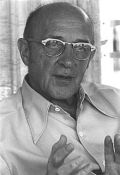
Carl RogersPsychotherapist Carl Rogers (1902-1987) born in Illinois, USA is well known for being the founder of ‘Humanistic Psychology’. Believing that therapy should be client centred. Rogers initially studied theology, but later moved towards a more educational aspect of psychology. Throughout his life, Rogers studied at a number of institutes including the University of Wisconsin and Union Theological Seminary. He dropped out of the Union Theological Seminary to study clinical psychology at Columbia University.

Rogers is famous for his ‘Personality Development’ theory.  He believed that humans can change the personality of other individuals. Rogers came up with the concept of ‘client centred therapy’.  ’Rogers proposed that therapy could be simpler, warmer and more optimistic than that carried out by behavioural or psychodynamic psychologists.’  (McLeod, 2008) Rogers (1986) said that “It is that the individual has within himself or herself vast resources for self-understanding, for altering his or her self-concept, attitudes and self-directed behaviour – and that these resources can be tapped if only definable climate of facilitative psychological attitudes can be provided”. (Kirschenbaum, H and Henderson, V (1989))

For his theory he identified 6 conditions:

  1. Two people must have psychological contact
  2. One of the two have to be in a state of ‘in-congruence’, vulnerable or anxious (client)
  3. The other must be congruent or intergrated into the relationship (therapist)
  4. The individual who is congruent must show unconditional positive regard for the one in a state of ‘in-congurence’
  5. They must also have empathy towards the one in a state of ‘in-congruence’
  6. This all must be to a minimal degree

Roger ‘believed that the experience of being understood and valued gives one the freedom to grow’ Rogers took his experiences from therapy to the process of education and ‘developed the concept of learner-centred teaching.’ He came up with five ideas for learner-centred education.

  1. ‘A person cannot teach another person directly’
  2. ‘A person learns significantly only those things that are perceived as being involved in the maintenance of or enhancement of the structure of self.’
  3. ‘Experience which, if assimilated, would involve a change in the organization of self, tends to be resisted through denial or distortion of symbolism’
  4. ‘The structure and organization of self appears to become more rigid under threats and to relax its boundaries when completely free from threat’
  5. ‘The educational situation which most effectively promotes significant learning is one in which (a) threat to the self of the learner is reduced to a minimum and (b) differentiated perception of the field is facilitated’

Rogers’ ‘Personality Development’ Theory is important when it comes to learning because if we create the idea of learner centred learning, the pupil is more likely to want to learn and retain the knowledge.

The idea of ‘unconditional positive regard’ is another main link in Rogers theory to learning and education. When teaching children teachers must be aware on how what they say can affect the child. By positively encouraging students, it helps them want to find out more, and should produce a more relaxed working environment.

carl quote

References

Kirschenbaum, H and Henderson, V (1989) The Carl Rogers Reader  Library of Congress Cataloging-in Publication Data: New York.

McLeod, S. (2008) Person Centered Therapy [Online] Avaliable at: http://www.simplypsychology.org/client-centred-therapy.html (Accessed: 22 Jan 2013)